







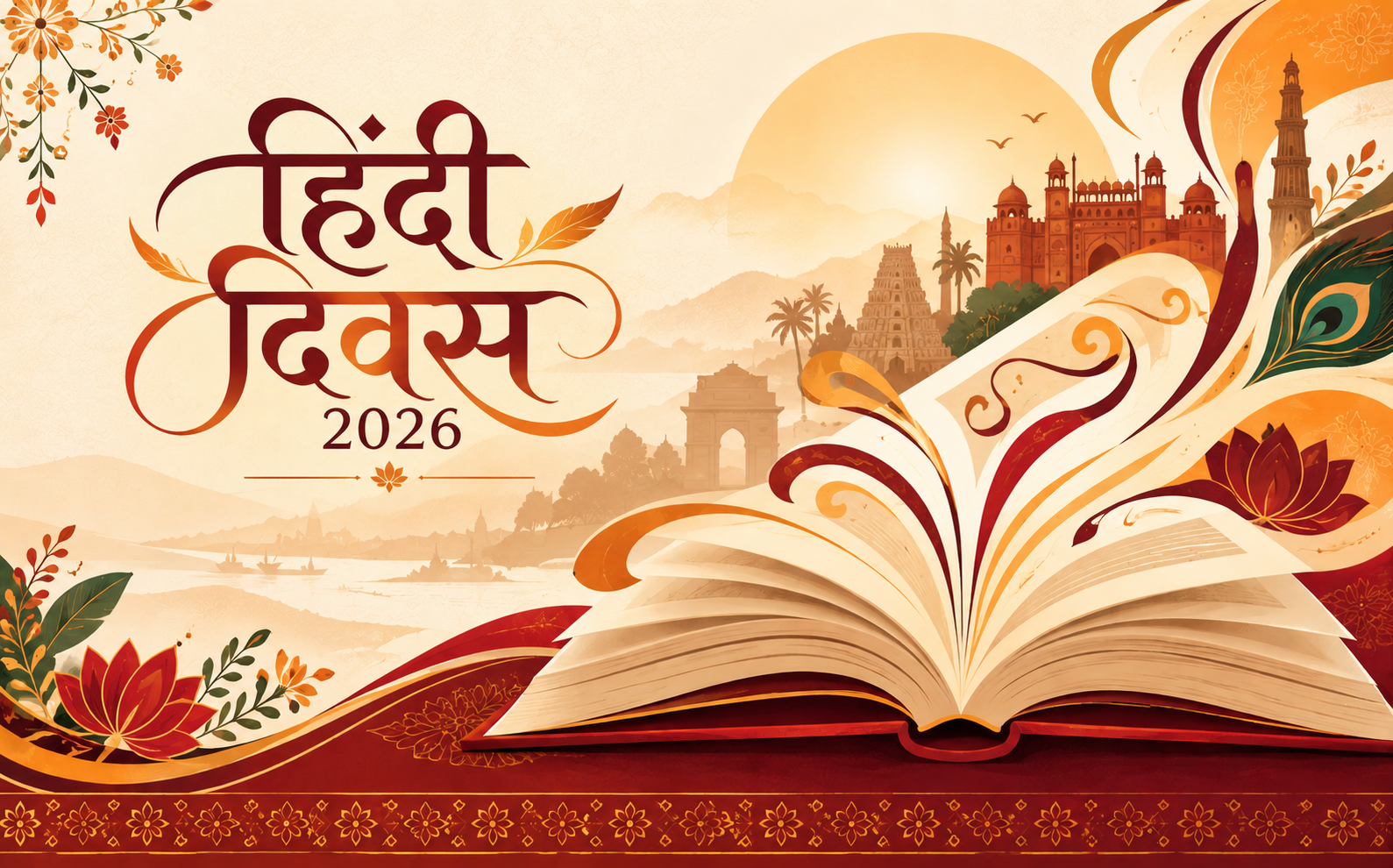
Here’s a fun fact that surprises a lot of people, even in India: the country doesn’t actually have a “national language.” No single tongue was ever crowned the official voice of the nation. And yet, every year on September 14, India pauses to celebrate one language in particular – Hindi. That day is called Hindi Diwas, and in 2026, it falls on a Monday, September 14.
So what exactly are people celebrating, and why does it matter – even if you’ve never spoken a word of Hindi in your life? Let’s unpack it.
What Is Hindi Diwas, Really?
At its core, Hindi Diwas isn’t a birthday for the Hindi language – Hindi has existed for centuries. It’s a commemoration of a *decision*. Specifically, it marks the day India’s Constituent Assembly agreed to adopt Hindi, written in the Devanagari script, as the Official Language of the Union. That’s a mouthful, but the short version is: it’s a day about paperwork that changed a nation’s identity.
Rewind to 1949: A Nation Deciding How to Talk to Itself
Picture India right after independence – a brand-new democracy trying to stitch together dozens of languages, hundreds of dialects, and a population larger than most continents combined. The Constituent Assembly had a genuinely tough question in front of it: which language should represent this enormous, diverse country on official documents and in government business?
There was no easy answer. Hindi had the numbers – it was already the single most widely spoken language in the country. Mahatma Gandhi, notably, had pushed for something slightly different: “Hindustani,” a blended form of Hindi and Urdu that both Hindu and Muslim communities in northern India could relate to. But consensus is messy, and eventually the Assembly settled on Hindi in Devanagari script as a practical middle ground – not a declaration that Hindi was superior to other Indian languages, but a workable choice for a government that needed one language for administrative consistency [Drikpanchang].
That decision was made on September 14, 1949.
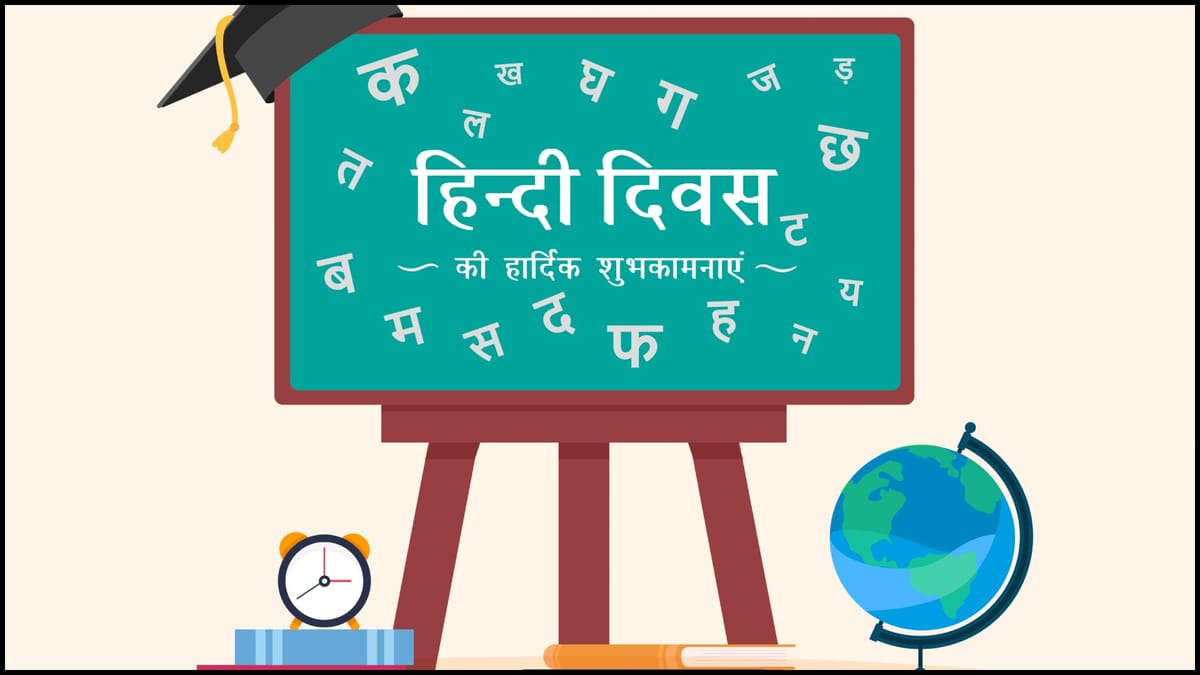
From Decision to Law
Here’s the part that often gets missed: the 1949 decision didn’t become legally binding overnight. It only took effect on January 26, 1950, the day India’s Constitution came into force. That’s when Article 343 stepped in, formally stating that the Official Language of the Union “shall be Hindi in Devanagari script.” A companion clause, Article 351, went a step further – it directed the government to actively encourage the growth and spread of Hindi as a medium for expressing India’s shared culture [Utkarsh]
Three years later, in 1953, the government began formally observing September 14 as Hindi Diwas – a tradition that’s continued for more than seven decades now, without a single break.
Wait – So Is Hindi India’s National Language?
This is probably the most common misconception out there, and it’s worth clearing up clearly: No, Hindi is not India’s national language. The Constitution never named one. What Hindi holds is official language status at the Union level – meaning it’s used for central government work – while English continues to serve alongside it under the Official Languages Act, 1963. On top of that, the Constitution recognises 22 languages in total, and individual states are free to choose their own official languages Vajiram & Ravi. So Hindi Diwas isn’t really about one language winning it’s about honouring a practical compromise in a country that speaks in hundreds of voices.
Don’t Mix This Up: Hindi Diwas vs. World Hindi Day
If you’ve seen both terms floating around online, you’re not imagining things – they’re genuinely different occasions.
| Hindi Diwas | World Hindi Day | |
| Date | September 14 | January 10 |
| First observed | 1953 | 2006 |
| Origin | 1949 Constituent Assembly decision | 1975 World Hindi Conference in |
| Focus | Promoting Hindi within India | Promoting Hindi globally |
| Observed by | Schools, colleges, government offices in India |
Think of it this way: Hindi Diwas looks inward, World Hindi Day looks outward.
How the Day Actually Plays Out
Walk into almost any Indian school or government office on September 14, and you’ll likely find something happening – essay-writing contests, poetry recitations, debates, poster-making competitions, and Hindi handwriting drives. Government departments often stretch the occasion into an entire “Hindi Week,” using it as a nudge to bring more Hindi into everyday official work. There are also national-level awards handed out to individuals and institutions that have made standout contributions to the language.
A Few Numbers Worth Knowing
Hindi has roughly 528 million native speakers in India – about 43% of the population (2011 Census data, cited via Drikpanchang).
It ranks as the world’s 4th most-spoken language by native speakers, behind only Mandarin, Spanish, and English.
Despite that scale, Hindi still isn’t an official United Nations language – India has been lobbying for that recognition since 2015.
It has around 16 dialects, including Awadhi, Bhojpuri, Bundeli, and Khariboli, and traces its roots back to Vedic Sanskrit.
The Bigger Picture
Strip away the acronyms and constitutional articles, and Hindi Diwas is really a story about how a young, wildly diverse democracy found a workable way to communicate with itself – without pretending that one language could speak for everyone. That’s arguably more interesting than any “official holiday” label could capture.
So this September 14, whether or not Hindi is part of your daily life, it’s worth appreciating what the day actually represents: not linguistic dominance, but a 75-year-old compromise that still holds a nation of over a billion people together on paper – and increasingly, in spirit too.
Frequently Asked Questions (FAQs)
1. When is Hindi Diwas 2026?
Hindi Diwas 2026 falls on Monday, September 14, marking the day in 1949 when Hindi in Devanagari script was adopted as India’s Official Language of the Union.
2. Is Hindi India’s national language?
No. Despite common belief, Hindi Diwas 2026 doesn’t celebrate a “national language” — the Indian Constitution never designated one. Hindi holds official language status under Article 343, alongside English and 21 other constitutionally recognised languages.
3. What’s the difference between Hindi Diwas and World Hindi Day?
Hindi Diwas 2026 (September 14) focuses on promoting Hindi within India, while World Hindi Day (January 10) celebrates Hindi’s global reach and is observed mainly by Indian missions abroad.
4. Why is Hindi Diwas celebrated on September 14?
Hindi Diwas 2026 is observed on this date because the Constituent Assembly adopted Hindi in Devanagari script as the Official Language of the Union on September 14, 1949 — a decision later given legal force through Article 343.
5. How is Hindi Diwas 2026 celebrated in India?
Schools, colleges, and government offices mark Hindi Diwas 2026 with essay competitions, poetry recitations, debates, poster-making contests, and Hindi Week initiatives to promote everyday use of the language.