



Every year, as the month of Bhadrapada arrives, millions of hearts across India begin waiting for the same midnight. It is the night Lord Krishna took birth – a night devotees have kept alive for over five thousand years through fasting, prayer, and quiet devotion.
This year, that sacred midnight falls on Friday, September 4, 2026, for most households following the Smarta tradition, while ISKCON and Vaishnav temples observe it a day later, on September 5, when the Rohini Nakshatra aligns with sunrise. Both are honoured with equal faith – it simply depends on the tradition your heart follows.
What makes Janmashtami 2026 so special is that no two places celebrate it quite the same way. Some cities welcome Krishna with quiet midnight prayers, others with joyous processions and music. Here are five places in India where that devotion comes alive in its own beautiful way.
1. Mathura – Standing Where It All Actually Happened
There’s goosebumps, and then there’s standing inside the Krishna Janmasthan Temple in Mathura at 11:58 PM, packed shoulder to shoulder with a few thousand strangers, all of you waiting for the same second. This is the actual site – the prison cell where Krishna is believed to have been born to Devaki and Vasudeva over five thousand years ago.
The whole evening builds toward it. Flower-swings sway gently, jhankis recreate scenes from Krishna’s life like a living storybook, and the chanting just keeps climbing until the Nishita Puja finally arrives at midnight – the moment the whole crowd has been holding its breath for.
Fair warning: get there stupidly early. Travel guides covering this year’s celebrations recommend being in position well before 10 PM, because the crowd doesn’t trickle in – it floods in. One devotee, quoted in a *Deccan Herald* report, described the Mathura experience as something that simply can’t be replicated anywhere else. Stand in that crowd once, and you’ll get exactly what he meant.

2. Vrindavan – Where Krishna Is Still a Naughty Little Boy
Ten minutes down the road, Vrindavan tells a completely different story. Forget the birth – this town is obsessed with Krishna’s childhood mischief, and it shows in everything: Ras Leela performances that spill onto the streets, processions dripping in colour, bhajans that refuse to end before sunrise.
Do yourself a favour and catch the Mangala Aarti at Banke Bihari Mandir – but you’ll need to show up by 4:30 or 5 AM, because it’s only opened to public view on this one day a year, and the queue moves fast once it starts. Then, after dark, go stand in front of Prem Mandir. The white marble glows under coloured lights on Janmashtami night in a way that no photo – not even a good one – actually captures. If the crowds get to be too much, slip into Nidhivan or Seva Kunj, the quiet, forested pockets tied to Krishna’s rasa leela, for a breather that feels like its own kind of blessing.
3. Dwarka – Because Krishna Wasn’t Always a Baby
Here’s the plot twist most people forget: Krishna grew up, became a king, and built an entire coastal empire. That’s Dwarka – one of Hinduism’s four sacred dhams, and home to the Dwarkadhish Temple, among the oldest still standing in India. On Janmashtami night, the deity is dressed like royalty – gold ornaments, a yellow Pitambar robe – and the midnight aarti feels less like a birth celebration and more like a coronation.
Outside, it turns into a full-blown mela: food stalls, rides, live performances – genuinely one of the more fun, family-friendly versions of this festival. If you’re based in Gujarat, Mumbai, Rajkot, or Ahmedabad, this is a very doable long weekend. Coming from Delhi, though, budget more time – it’s not a quick dash.
4. Mumbai & Thane – Where Devotion Turns Into an Extreme Sport
And then, just when you think you’ve seen every version of Janmashtami – Mumbai flips the whole thing on its head.
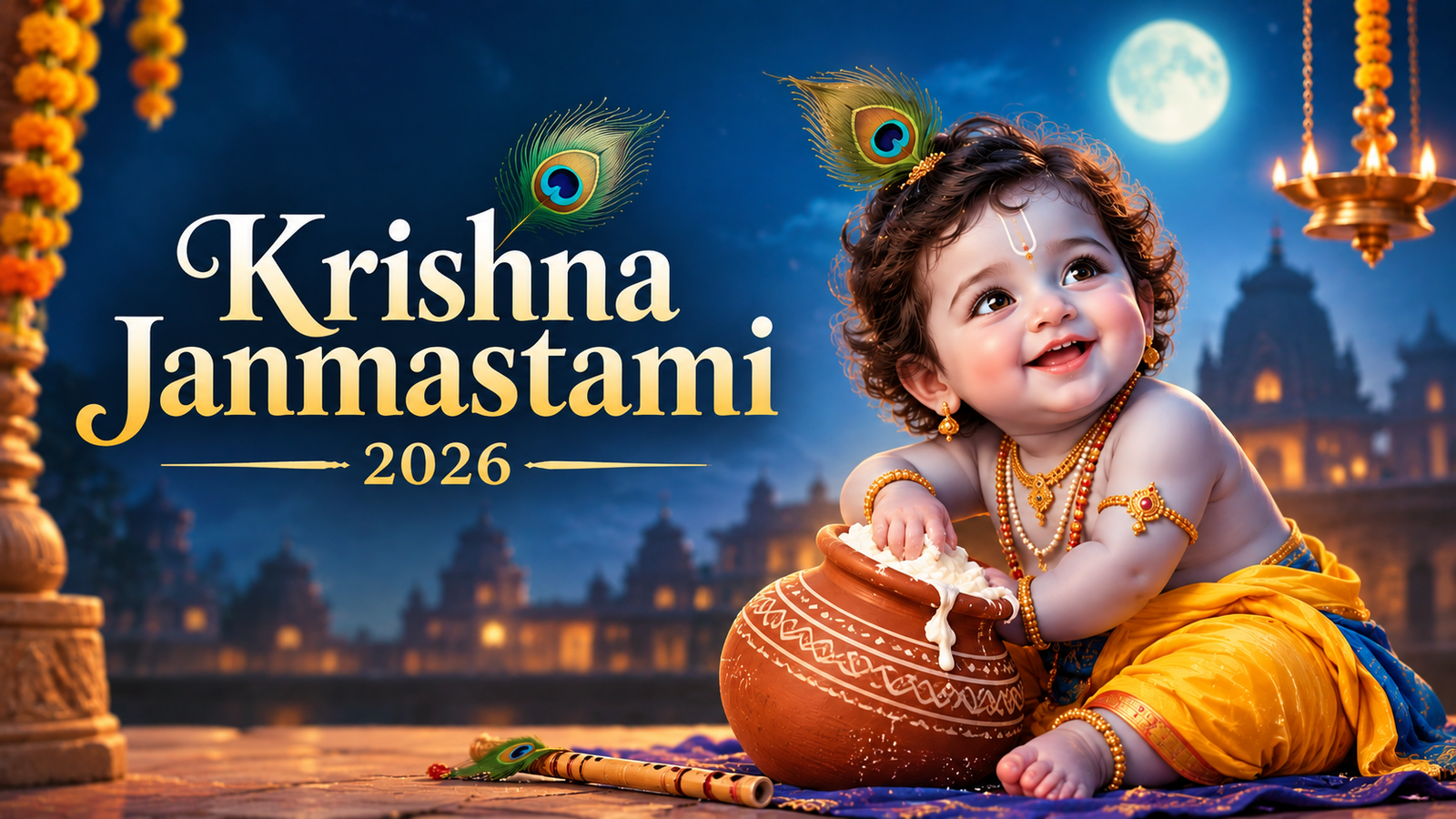
The morning after the midnight fast, the streets of Mumbai and Thane erupt. Literally. Teams of young men called Govindas climb onto each other’s shoulders, building human pyramids nine, sometimes ten storeys high, chasing a clay pot of curd dangling way above the street. It’s their tribute to baby Krishna’s most famous crime – stealing butter – except now it comes with drumbeats, water cannons, screaming crowds, and prize money that’s reportedly touched ₹25 lakh for the biggest pyramids.
Want a front-row seat to the madness?
Head to Dadar, Girgaum, or Ghatkopar, where the energy starts building hours before the first handi even breaks.
5. Nathdwara – The Idol Nobody Carved
After all that noise, Nathdwara in Rajasthan is where things go quiet again – and somehow, that hits just as hard. Its Shreenathji Temple holds a striking black idol of Krishna that devotees believe simply appeared, rather than being sculpted by human hands. There’s no pyramid-building here, no midnight stampede – just centuries of quiet, unwavering faith. For a lot of devotees, that’s exactly why it stays with them.
Before You Pack Your Bags
One practical note before you plan anything: since Janmashtami 2026 splits across two dates, double-check which day your chosen city actually celebrates on before you book tickets. And keep in mind – Ganesh Chaturthi follows just ten days later, so late August through mid-September is basically peak festival season in India. If a midnight darshan in Mathura or a ringside Dahi Handi view in Mumbai is on your bucket list this year, don’t sit on it.
Whether you end up chanting at midnight in Mathura, dodging water cannons in Mumbai, or sitting in silence before Shreenathji in Nathdwara – Janmashtami has this uncanny way of showing up exactly the way you need it to. That’s probably why, 5,253 years on, people are still showing up for it too.
Frequently Asked Questions (FAQs)
Q1. When is Janmashtami 2026?
Janmashtami 2026 falls on Friday, September 4, for most households following the Smarta tradition, while ISKCON and Vaishnav temples observe it on September 5.
Q2. Which is the best place to celebrate Janmashtami 2026 in India?
Mathura and Vrindavan offer the most spiritually significant Janmashtami 2026 celebrations since they’re linked directly to Krishna’s birth and childhood, while Mumbai is best for the high-energy Dahi Handi festivities.
Q3. Why does Janmashtami 2026 have two different dates?
The date difference comes down to tradition – Smarta devotees celebrate based on the Ashtami Tithi, while ISKCON and Vaishnav communities wait for the Rohini Nakshatra to align with sunrise, which falls a day later in 2026.
Q4. What is Dahi Handi and when does it happen during Janmashtami 2026?
Dahi Handi is a Maharashtrian tradition where teams called Govindas form human pyramids to break a curd-filled pot suspended overhead. It takes place the morning after the Janmashtami 2026 fast, mainly in Mumbai and Thane.
Q5. Is it necessary to visit Mathura or Vrindavan for Janmashtami 2026?
Not at all – while Mathura and Vrindavan offer the most traditional experience, cities like Dwarka, Mumbai, and Nathdwara celebrate Janmashtami 2026 with equally powerful, distinct traditions of their own.